There's a line from the animated movie Charlotte's Web that always comes to mind when I'm lying awake in the wee hours of the night: "When your stomach is empty and your mind is full, it's hard to fall asleep." This is a true statement. I haven't been sleeping well. Last night I forgot to eat dinner because I ate popcorn while watching scary old movies instead, so by 1:00 am my stomach was indeed empty. And my mind was full because, compounded with the page-turner I'd been reading before I turned off the light, I was trying to plot the perfect murder for a script I'm working on. Reading before bed usually relaxes me, but this book is having the opposite effect. It wakes my brain up.
Once I did fall asleep, I had some weird dream about living in a haunted house, but I chalk that up more to the creepy 1950s movie I saw earlier. All this to say that I was worried about having the same problem tonight-- the falling asleep, not the weird dream. Luckily, I have just discovered the cure for such a problem. Have a bunch of good friends over, drink a few cups of hot mulled wine, watch a hilariously bad movie and laugh until your abs are sore. You will be sleepy and happy by the time they leave. Right now I can barely see through my bleary eyes. Could be the mulled wine, but I thank my friends.
Your Catfish Friend
If I were to live my life
in catfish forms
in scaffolds of skin and whiskers
at the bottom of a pond
and you were to come by
one evening
when the moon was shining
down into my dark home
and stand there at the edge
of my affection
and think, "It's beautiful
here by this pond. I wish
somebody loved me,"
I'd love you and be your catfish
friend and drive such lonely
thoughts from your mind
and suddenly you would be
at peace,
and ask yourself, "I wonder
if there are any catfish
in this pond? It seems like
a perfect place for them."
-Richard Brautigan
Sunday, October 31, 2010

Friday, October 29, 2010
A procrastinator's guide to Halloween costumes
Halloween is in two days, but most celebrations will be taking place Saturday night. That doesn't leave much time for costume planning. If you're like me and wait until the last minute every year, here are some tricks I've learned that I pass on to you.
1. Take inventory of what you have in the house. Even the most basic household items could be repurposed as props. One year at the West Hollywood Halloween parade, I saw a woman dressed as a dinner table. It was a 3D costume, complete with food and dishes, and even a romantic candle.
2. Read up on the news. What stories are getting the most coverage? Are there any colorful characters that you could impersonate? Last year my roommate went as Balloon Boy, and her ingenious costume really came down to poster board, an umbrella, and some silver fabric.
3. Don't discount the advantages of make up. Even a hefty application of bronzer could get you halfway to being a Jersey Shore cast member.
4. When all else fails, go to Rite Aid. This is what I did last year when I was supposed to go to a party and had no idea what to be. I wandered the aisles hoping a blue wig or something would pop out at me and give me an idea. Luckily, a light bulb went off over the board game section, and I went home feeling confident in my new purchase of Twister. Any board game could work, really. All you have to do is turn the board into a hat by duct taping it to a head band (the soft, sporty kind). And for the rest of the costume, you could either dress as a character from the game or use the playing pieces as accessories. With Twister, I wore the mat as a dress and the spinner as a hat. I cut a hand out of a piece of orange construction paper and taped it to one of the dots on the mat. Bingo. Interactive outfit. You could do the same with Clue or Monopoly and simply dress as Miss Scarlet, Professor Plum, or that guy in the top hat who gives away money. I promise you will make lots of new friends this way.
Happy Halloween!
Macbeth, Act IV, Scene I
(Round about the cauldron go)
by William Shakespeare
The three witches, casting a spell
Round about the cauldron go;
In the poison’d entrails throw.
Toad, that under cold stone
Days and nights hast thirty one
Swelter’d venom sleeping got,
Boil thou first i’ the charmed pot.
Double, double toil and trouble;
Fire burn and cauldron bubble.
Fillet of a fenny snake,
In the cauldron boil and bake;
Eye of newt, and toe of frog,
Wool of bat, and tongue of dog,
Adder’s fork, and blind-worm’s sting,
Lizard’s leg, and howlet’s wing,
For a charm of powerful trouble,
Like a hell-broth boil and bubble.
Double, double toil and trouble;
Fire burn and cauldron bubble.
Scale of dragon, tooth of wolf,
Witches’ mummy, maw and gulf
Of the ravin’d salt-sea shark,
Root of hemlock digg’d i’ the dark,
Liver of blaspheming Jew,
Gall of goat, and slips of yew
Sliver’d in the moon’s eclipse,
Nose of Turk, and Tartar’s lips,
Finger of birth-strangled babe
Ditch-deliver’d by a drab,
Make the gruel thick and slab:
Add thereto a tiger’s chaudron,
For the ingredients of our cauldron.
Double, double toil and trouble;
Fire burn and cauldron bubble.
1. Take inventory of what you have in the house. Even the most basic household items could be repurposed as props. One year at the West Hollywood Halloween parade, I saw a woman dressed as a dinner table. It was a 3D costume, complete with food and dishes, and even a romantic candle.
2. Read up on the news. What stories are getting the most coverage? Are there any colorful characters that you could impersonate? Last year my roommate went as Balloon Boy, and her ingenious costume really came down to poster board, an umbrella, and some silver fabric.
3. Don't discount the advantages of make up. Even a hefty application of bronzer could get you halfway to being a Jersey Shore cast member.
4. When all else fails, go to Rite Aid. This is what I did last year when I was supposed to go to a party and had no idea what to be. I wandered the aisles hoping a blue wig or something would pop out at me and give me an idea. Luckily, a light bulb went off over the board game section, and I went home feeling confident in my new purchase of Twister. Any board game could work, really. All you have to do is turn the board into a hat by duct taping it to a head band (the soft, sporty kind). And for the rest of the costume, you could either dress as a character from the game or use the playing pieces as accessories. With Twister, I wore the mat as a dress and the spinner as a hat. I cut a hand out of a piece of orange construction paper and taped it to one of the dots on the mat. Bingo. Interactive outfit. You could do the same with Clue or Monopoly and simply dress as Miss Scarlet, Professor Plum, or that guy in the top hat who gives away money. I promise you will make lots of new friends this way.
Happy Halloween!
Macbeth, Act IV, Scene I
(Round about the cauldron go)
by William Shakespeare
The three witches, casting a spell
Round about the cauldron go;
In the poison’d entrails throw.
Toad, that under cold stone
Days and nights hast thirty one
Swelter’d venom sleeping got,
Boil thou first i’ the charmed pot.
Double, double toil and trouble;
Fire burn and cauldron bubble.
Fillet of a fenny snake,
In the cauldron boil and bake;
Eye of newt, and toe of frog,
Wool of bat, and tongue of dog,
Adder’s fork, and blind-worm’s sting,
Lizard’s leg, and howlet’s wing,
For a charm of powerful trouble,
Like a hell-broth boil and bubble.
Double, double toil and trouble;
Fire burn and cauldron bubble.
Scale of dragon, tooth of wolf,
Witches’ mummy, maw and gulf
Of the ravin’d salt-sea shark,
Root of hemlock digg’d i’ the dark,
Liver of blaspheming Jew,
Gall of goat, and slips of yew
Sliver’d in the moon’s eclipse,
Nose of Turk, and Tartar’s lips,
Finger of birth-strangled babe
Ditch-deliver’d by a drab,
Make the gruel thick and slab:
Add thereto a tiger’s chaudron,
For the ingredients of our cauldron.
Double, double toil and trouble;
Fire burn and cauldron bubble.
Thursday, October 28, 2010
Basically, I'm a big scaredy cat.
I have many fears, including but not limited to spiders, roaches, tornadoes, traveling in a car on a bridge over water, heights (this is a new one), and velociraptors. But one other very serious fear for me is encountering a blank screen when I sit down to write. It's a classic western stand-off. The blank page says that it is better off without anything on it. It reasons with me: "Better to remain silent and be thought a fool than to open your mouth and remove all doubt." Yeah, thanks for that, page.
Some of the ways I've learned to combat this is to jot down some ideas or the first lines of something on a scrap of paper. That way, I have something to immediately type up before the page can get a word in edgewise. I also stumbled onto another process accidentally. I once had to type up a poem for class from an author I admired, and even the physical act of typing those lines that I knew were great and seeing the words appear on the screen as I "wrote" them gave me courage. It's hard to explain, but if I type a few stanzas from Edgar Allen Poe, I get an idea of what it's like to see myself type something good, and then it makes me want to tackle my own writing and be better at it. That's one of the reasons I enjoy writing the entries for this blog.
In keeping with the Halloween theme of the week, I thought a little Poe was in order. Now I'll bet you think I'm going to post "The Raven." That poem's pretty good, but I prefer "Annabel Lee." It was the last poem Poe wrote before he died. Many people assume it's about his wife, Virginia, who had died from tuberculosis a couple years before. Poe said that the death of a beautiful woman was the most poetical theme to write about. This poem gives me the wiggins.
Annabel Lee
Some of the ways I've learned to combat this is to jot down some ideas or the first lines of something on a scrap of paper. That way, I have something to immediately type up before the page can get a word in edgewise. I also stumbled onto another process accidentally. I once had to type up a poem for class from an author I admired, and even the physical act of typing those lines that I knew were great and seeing the words appear on the screen as I "wrote" them gave me courage. It's hard to explain, but if I type a few stanzas from Edgar Allen Poe, I get an idea of what it's like to see myself type something good, and then it makes me want to tackle my own writing and be better at it. That's one of the reasons I enjoy writing the entries for this blog.
In keeping with the Halloween theme of the week, I thought a little Poe was in order. Now I'll bet you think I'm going to post "The Raven." That poem's pretty good, but I prefer "Annabel Lee." It was the last poem Poe wrote before he died. Many people assume it's about his wife, Virginia, who had died from tuberculosis a couple years before. Poe said that the death of a beautiful woman was the most poetical theme to write about. This poem gives me the wiggins.
Annabel Lee
It was many and many a year ago,
In a kingdom by the sea,
That a maiden there lived whom you may know
By the name of Annabel Lee;
And this maiden she lived with no other thought
Than to love and be loved by me.
I was a child and she was a child,
In this kingdom by the sea,
But we loved with a love that was more than love—
I and my Annabel Lee—
With a love that the wingèd seraphs of Heaven
Coveted her and me.
And this was the reason that, long ago,
In this kingdom by the sea,
A wind blew out of a cloud, chilling
My beautiful Annabel Lee;
So that her highborn kinsmen came
And bore her away from me,
To shut her up in a sepulchre
In this kingdom by the sea.
The angels, not half so happy in Heaven,
Went envying her and me—
Yes!—that was the reason (as all men know,
In this kingdom by the sea)
That the wind came out of the cloud by night,
Chilling and killing my Annabel Lee.
But our love it was stronger by far than the love
Of those who were older than we—
Of many far wiser than we—
And neither the angels in Heaven above
Nor the demons down under the sea
Can ever dissever my soul from the soul
Of the beautiful Annabel Lee;
For the moon never beams, without bringing me dreams
Of the beautiful Annabel Lee;
And the stars never rise, but I feel the bright eyes
Of the beautiful Annabel Lee;
And so, all the night-tide, I lie down by the side
Of my darling—my darling—my life and my bride,
In her sepulchre there by the sea—
In her tomb by the sounding sea.
Wednesday, October 27, 2010
AMC's programming is neither classic nor movies. Discuss.
Well, I've been a bit under the weather lately, which is good for catching up on movies and rest but bad for productivity. When I stayed home sick from high school, I would watch the classic movie channels and count it a lucky day if they were playing a Bob Hope, Doris Day, or Danny Kaye marathon. More often than not, they were showing 1954's There's No Business Like Show Business with Ethel Merman and Marilyn Monroe. The music was all Irving Berlin and watching it, it was easy to forget I was sick.
Another stalwart in my sick day anthology was Anne of Green Gables. What little girl has not seen this movie and identified with Anne (with an "e") Shirley? Who didn't swoon when Gilbert Blythe got scarlet fever? Watching this classic was the first time I ever heard the poem, "The Highwayman." Anne recites it at a luncheon and it's captivating. Later in college, I was studying the Romantic poets and came across "The Highwayman" again. The author, Alfred Noyes, was heavily influenced by the Romantics, like Tennyson and Wordsworth. I printed out the poem and put it on my dorm room wall. It is a masterful piece of writing and one of my favorites. The rhythm is like a song, and the imagery is perfect for this Halloween season. Enjoy.
The Highwayman
The wind was a torrent of darkness among the gusty trees,
The moon was a ghostly galleon tossed upon cloudy seas,
The road was a ribbon of moonlight over the purple moor,
And the highwayman came riding--
Riding--riding--
The highwayman came riding, up to the old inn-door.
He'd a French cocked-hat on his forehead, a bunch of lace at his chin,
A coat of the claret velvet, and breeches of brown doe-skin;
They fitted with never a wrinkle: his boots were up to the thigh.
And he rode with a jeweled twinkle,
His pistol butts a-twinkle,
His rapier hilt a-twinkle, under the jeweled sky.
Over the cobbles he clattered and clashed in the dark inn-yard,
He tapped with his whip on the shutters, but all was locked and barred;
He whistled a tune to the window, and who should be waiting there
But the landlord's black-eyed daughter,
Bess, the landlord's daughter,
Plaiting a dark red love-knot into her long black hair.
And dark in the dark old inn-yard a stable-wicket creaked
Where Tim the ostler listened; his face was white and peaked;
His eyes were hollows of madness, his hair like moldy hay,
But he loved the landlord's daughter,
The landlord's red-lipped daughter,
Dumb as a dog he listened, and he heard the robber say--
"One kiss, my bonny sweetheart, I'm after a prize tonight,
But I shall be back with the yellow gold before the morning light;
Yet, if they press me sharply, and harry me through the day,
Then look for me by moonlight,
Watch for me by moonlight,
I'll come to thee by moonlight, though hell should bar the way."
He rose upright in the stirrups; he scarce could reach her hand,
But she loosened her hair in the casement. His face burnt like a brand
As the black cascade of perfume came tumbling over his breast;
And he kissed its waves in the moonlight,
(Oh, sweet black waves in the moonlight!)
Then he tugged at his rein in the moonlight, and galloped away to the West.
He did not come in the dawning; he did not come at noon;
And out of the tawny sunset, before the rise of the moon,
When the road was a gypsy's ribbon, looping the purple moor,
A red-coat troop came marching--
Marching--marching--
King George's men came marching, up to the old inn-door.
They said no word to the landlord, they drank his ale instead,
But they gagged his daughter and bound her to the foot of her narrow bed;
Two of them knelt at her casement, with muskets at their side.
There was death at every window;
And hell at one dark window;
For Bess could see, through her casement, the road that he would ride.
They had tied her up to attention, with many a sniggering jest.
They had bound a musket beside her, with the barrel beneath her breast.
"Now keep good watch!" and they kissed her. She heard the doomed man say--
Look for me by moonlight;
Watch for me by moonlight;
I'll come to thee by moonlight, though hell should bar the way!
She twisted her hands behind her; but all the knots held good.
She writhed her hands till her fingers were wet with sweat or blood.
They stretched and strained in the darkness, and the hours crawled by like years,
Till, now, on the stroke of midnight,
Cold, on the stroke of midnight,
The tip of one finger touched it! The trigger at least was hers!
The tip of one finger touched it. She strove no more for the rest.
Up, she stood up to attention, with the muzzle beneath her breast.
She would not risk their hearing; she would not strive again;
For the road lay bare in the moonlight;
Blank and bare in the moonlight;
And the blood of her veins, in the moonlight, throbbed to her love's refrain.
Tlot-tlot; tlot-tlot! Had they heard it? The horse-hoofs ringing clear;
Tlot-tlot, tlot-tlot, in the distance? Were they deaf that they did not hear?
Down the ribbon of moonlight, over the brow of the hill,
The highwayman came riding,
Riding, riding!
The red-coats looked to their priming! She stood up, straight and still!
Tlot-tlot, in the frosty silence! Tlot-tlot, in the echoing night!
Nearer he came and nearer! Her face was like a light!
Her eyes grew wide for a moment; she drew one last deep breath,
Then her finger moved in the moonlight,
Her musket shattered the moonlight,
Shattered her breast in the moonlight and warned him--with her death.
He turned; he spurred to the west; he did not know who stood
Bowed, with her head o'er the musket, drenched with her own red blood.
Not till the dawn he heard it, his face grew gray to hear
How Bess, the landlord's daughter,
The landlord's black-eyed daughter,
Had watched for her love in the moonlight, and died in the darkness there.
Back, he spurred like a madman, shouting a curse to the sky,
With the white road smoking behind him and his rapier brandished high!
Blood-red were his spurs in the golden noon; wine-red was his velvet coat,
When they shot him down on the highway,
Down like a dog on the highway,
And he lay in his blood on the highway, with the bunch of lace at his throat.
And still of a winter's night, they say, when the wind is in the trees,
When the moon is a ghostly galleon tossed upon cloudy seas,
When the road is a ribbon of moonlight over the purple moor,
A highwayman comes riding--
Riding--riding--
A highwayman comes riding, up to the old inn-door.
Over the cobbles he clatters and clangs in the dark inn-yard;
He taps with his whip on the shutters, but all is locked and barred;
He whistles a tune to the window, and who should be waiting there
But the landlord's black-eyed daughter,
Bess, the landlord's daughter,
Plaiting a dark red love-knot into her long black hair.
-Alfred Noyes
Another stalwart in my sick day anthology was Anne of Green Gables. What little girl has not seen this movie and identified with Anne (with an "e") Shirley? Who didn't swoon when Gilbert Blythe got scarlet fever? Watching this classic was the first time I ever heard the poem, "The Highwayman." Anne recites it at a luncheon and it's captivating. Later in college, I was studying the Romantic poets and came across "The Highwayman" again. The author, Alfred Noyes, was heavily influenced by the Romantics, like Tennyson and Wordsworth. I printed out the poem and put it on my dorm room wall. It is a masterful piece of writing and one of my favorites. The rhythm is like a song, and the imagery is perfect for this Halloween season. Enjoy.
The Highwayman
The wind was a torrent of darkness among the gusty trees,
The moon was a ghostly galleon tossed upon cloudy seas,
The road was a ribbon of moonlight over the purple moor,
And the highwayman came riding--
Riding--riding--
The highwayman came riding, up to the old inn-door.
He'd a French cocked-hat on his forehead, a bunch of lace at his chin,
A coat of the claret velvet, and breeches of brown doe-skin;
They fitted with never a wrinkle: his boots were up to the thigh.
And he rode with a jeweled twinkle,
His pistol butts a-twinkle,
His rapier hilt a-twinkle, under the jeweled sky.
Over the cobbles he clattered and clashed in the dark inn-yard,
He tapped with his whip on the shutters, but all was locked and barred;
He whistled a tune to the window, and who should be waiting there
But the landlord's black-eyed daughter,
Bess, the landlord's daughter,
Plaiting a dark red love-knot into her long black hair.
And dark in the dark old inn-yard a stable-wicket creaked
Where Tim the ostler listened; his face was white and peaked;
His eyes were hollows of madness, his hair like moldy hay,
But he loved the landlord's daughter,
The landlord's red-lipped daughter,
Dumb as a dog he listened, and he heard the robber say--
"One kiss, my bonny sweetheart, I'm after a prize tonight,
But I shall be back with the yellow gold before the morning light;
Yet, if they press me sharply, and harry me through the day,
Then look for me by moonlight,
Watch for me by moonlight,
I'll come to thee by moonlight, though hell should bar the way."
He rose upright in the stirrups; he scarce could reach her hand,
But she loosened her hair in the casement. His face burnt like a brand
As the black cascade of perfume came tumbling over his breast;
And he kissed its waves in the moonlight,
(Oh, sweet black waves in the moonlight!)
Then he tugged at his rein in the moonlight, and galloped away to the West.
He did not come in the dawning; he did not come at noon;
And out of the tawny sunset, before the rise of the moon,
When the road was a gypsy's ribbon, looping the purple moor,
A red-coat troop came marching--
Marching--marching--
King George's men came marching, up to the old inn-door.
They said no word to the landlord, they drank his ale instead,
But they gagged his daughter and bound her to the foot of her narrow bed;
Two of them knelt at her casement, with muskets at their side.
There was death at every window;
And hell at one dark window;
For Bess could see, through her casement, the road that he would ride.
They had tied her up to attention, with many a sniggering jest.
They had bound a musket beside her, with the barrel beneath her breast.
"Now keep good watch!" and they kissed her. She heard the doomed man say--
Look for me by moonlight;
Watch for me by moonlight;
I'll come to thee by moonlight, though hell should bar the way!
She twisted her hands behind her; but all the knots held good.
She writhed her hands till her fingers were wet with sweat or blood.
They stretched and strained in the darkness, and the hours crawled by like years,
Till, now, on the stroke of midnight,
Cold, on the stroke of midnight,
The tip of one finger touched it! The trigger at least was hers!
The tip of one finger touched it. She strove no more for the rest.
Up, she stood up to attention, with the muzzle beneath her breast.
She would not risk their hearing; she would not strive again;
For the road lay bare in the moonlight;
Blank and bare in the moonlight;
And the blood of her veins, in the moonlight, throbbed to her love's refrain.
Tlot-tlot; tlot-tlot! Had they heard it? The horse-hoofs ringing clear;
Tlot-tlot, tlot-tlot, in the distance? Were they deaf that they did not hear?
Down the ribbon of moonlight, over the brow of the hill,
The highwayman came riding,
Riding, riding!
The red-coats looked to their priming! She stood up, straight and still!
Tlot-tlot, in the frosty silence! Tlot-tlot, in the echoing night!
Nearer he came and nearer! Her face was like a light!
Her eyes grew wide for a moment; she drew one last deep breath,
Then her finger moved in the moonlight,
Her musket shattered the moonlight,
Shattered her breast in the moonlight and warned him--with her death.
He turned; he spurred to the west; he did not know who stood
Bowed, with her head o'er the musket, drenched with her own red blood.
Not till the dawn he heard it, his face grew gray to hear
How Bess, the landlord's daughter,
The landlord's black-eyed daughter,
Had watched for her love in the moonlight, and died in the darkness there.
Back, he spurred like a madman, shouting a curse to the sky,
With the white road smoking behind him and his rapier brandished high!
Blood-red were his spurs in the golden noon; wine-red was his velvet coat,
When they shot him down on the highway,
Down like a dog on the highway,
And he lay in his blood on the highway, with the bunch of lace at his throat.
And still of a winter's night, they say, when the wind is in the trees,
When the moon is a ghostly galleon tossed upon cloudy seas,
When the road is a ribbon of moonlight over the purple moor,
A highwayman comes riding--
Riding--riding--
A highwayman comes riding, up to the old inn-door.
Over the cobbles he clatters and clangs in the dark inn-yard;
He taps with his whip on the shutters, but all is locked and barred;
He whistles a tune to the window, and who should be waiting there
But the landlord's black-eyed daughter,
Bess, the landlord's daughter,
Plaiting a dark red love-knot into her long black hair.
-Alfred Noyes
Tuesday, October 26, 2010
Meanwhile an engine revved, the neighbors yelled, rap music played, a horn honked, and the taco truck passed by.
I drove down to visit my grandmother on Saturday. Say what you will about the suburbs, but the thing that immediately strikes me when I go there is the quietness of the neighborhood. Her backyard feels like an oasis. Actually, it reminds me of the secret garden. Not that it's not well-maintained, but that it's stuck in a time long past.
My grandfather loved fountains and he put two of them in the backyard way back in the '70s. One is a lion's head on the far back wall that used to spout water into a ceramic pool. The other is much larger and looks to me like a chess piece. The bottom part where the water used to flow is surrounded by a short wall. When I was little and we would come out to visit my grandparents, I liked to play by that fountain and pretend that the wall was the gazebo in The Sound of Music. I would skip around on it singing "You Are Sixteen Going on Seventeen." Sixteen seemed to be a magical age, full of possibility.
This past visit, I was in the backyard looking at those fountains sitting thirsty. They are surrounded by enormous lemon and orange trees that are currently bursting with fruit. Those trees, as old as the fountains, made for a nice paradox.
While I can still recall the sound of water spilling through the fountains-- a calm yet lively sound-- these days I can also appreciate the silence.
Shark's Teeth
Everything contains some
silence. Noise gets
its zest from the
small shark's-tooth
shaped fragments
of rest angled
in it. An hour
of city holds maybe
a minute of these
remnants of a time
when silence reigned,
compact and dangerous
as a shark. Sometimes
a bit of a tail
or fin can still
be sensed in parks.
-Kay Ryan
My grandfather loved fountains and he put two of them in the backyard way back in the '70s. One is a lion's head on the far back wall that used to spout water into a ceramic pool. The other is much larger and looks to me like a chess piece. The bottom part where the water used to flow is surrounded by a short wall. When I was little and we would come out to visit my grandparents, I liked to play by that fountain and pretend that the wall was the gazebo in The Sound of Music. I would skip around on it singing "You Are Sixteen Going on Seventeen." Sixteen seemed to be a magical age, full of possibility.
This past visit, I was in the backyard looking at those fountains sitting thirsty. They are surrounded by enormous lemon and orange trees that are currently bursting with fruit. Those trees, as old as the fountains, made for a nice paradox.
While I can still recall the sound of water spilling through the fountains-- a calm yet lively sound-- these days I can also appreciate the silence.
Shark's Teeth
Everything contains some
silence. Noise gets
its zest from the
small shark's-tooth
shaped fragments
of rest angled
in it. An hour
of city holds maybe
a minute of these
remnants of a time
when silence reigned,
compact and dangerous
as a shark. Sometimes
a bit of a tail
or fin can still
be sensed in parks.
-Kay Ryan
Monday, October 25, 2010
I have a cold, and I'm supposed to feed it.
This is not a cooking blog, but I can't help sharing what I've been up to over the weekend, which includes this fabulous coffee cake:
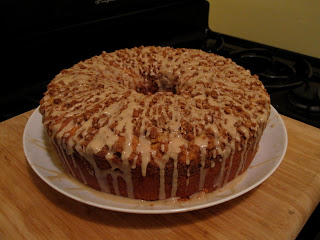
It's actually the Barefoot Contessa's recipe, but I altered it ever so slightly and I was pretty proud of how it turned out. Lately I've been so focused on eating vegetables and trying to stay healthy that I haven't been much in the mood for cooking or baking. I mean, if I bake something, I'm going to feel like I earned the right to eat it. But in the interest of trying to use up the insane amount of grapes I had leftover from the last CSA pickup, I also decided to make a grape focaccia recipe I've had my eye on. Grapes and focaccia? It's actually a Tuscan thing and it is delicious:

Never before have I tried to make my own bread, but I reached way down to my Italian old lady roots and kneaded that dough like a genuine nonna. It felt so good, I seriously considered opening a pizzeria for about 5 seconds. Eh, I'm over it now.
Monday
The birds are in their trees,
the toast is in the toaster,
and the poets are at their windows.
They are at their windows
in every section of the tangerine of earth--
the Chinese poets looking up at the moon,
the American poets gazing out
at the pink and blue ribbons of sunrise.
The clerks are at their desks,
the miners are down in their mines,
and the poets are looking out their windows
maybe with a cigarette, a cup of tea,
and maybe a flannel shirt or bathrobe is involved.
The proofreaders are playing the ping-pong
game of proofreading,
glancing back and forth from page to page,
the chefs are dicing celery and potatoes,
and the poets are at their windows
because it is their job for which
they are paid nothing every Friday afternoon.
Which window it hardly seems to matter
though many have a favorite,
for there is always something to see--
a bird grasping a thin branch,
the headlights of a taxi rounding a corner,
those two boys in wool caps angling across the street.
The fishermen bob in their boats,
the linemen climb their round poles,
the barbers wait by their mirrors and chairs,
and the poets continue to stare
at the cracked birdbath or a limb knocked down by the wind.
By now, it should go without saying
that what the oven is to the baker
and the berry-stained blouse to the dry cleaner,
so the window is to the poet.
Just think--
before the invention of the window,
the poets would have had to put on a jacket
and a winter hat to go outside
or remain indoors with only a wall to stare at.
And when I say a wall,
I do not mean a wall with striped wallpaper
and a sketch of a cow in a frame.
I mean a cold wall of fieldstones,
the wall of the medieval sonnet,
the original woman's heart of stone,
the stone caught in the throat of her poet-lover.
-Billy Collins

It's actually the Barefoot Contessa's recipe, but I altered it ever so slightly and I was pretty proud of how it turned out. Lately I've been so focused on eating vegetables and trying to stay healthy that I haven't been much in the mood for cooking or baking. I mean, if I bake something, I'm going to feel like I earned the right to eat it. But in the interest of trying to use up the insane amount of grapes I had leftover from the last CSA pickup, I also decided to make a grape focaccia recipe I've had my eye on. Grapes and focaccia? It's actually a Tuscan thing and it is delicious:

Monday
The birds are in their trees,
the toast is in the toaster,
and the poets are at their windows.
They are at their windows
in every section of the tangerine of earth--
the Chinese poets looking up at the moon,
the American poets gazing out
at the pink and blue ribbons of sunrise.
The clerks are at their desks,
the miners are down in their mines,
and the poets are looking out their windows
maybe with a cigarette, a cup of tea,
and maybe a flannel shirt or bathrobe is involved.
The proofreaders are playing the ping-pong
game of proofreading,
glancing back and forth from page to page,
the chefs are dicing celery and potatoes,
and the poets are at their windows
because it is their job for which
they are paid nothing every Friday afternoon.
Which window it hardly seems to matter
though many have a favorite,
for there is always something to see--
a bird grasping a thin branch,
the headlights of a taxi rounding a corner,
those two boys in wool caps angling across the street.
The fishermen bob in their boats,
the linemen climb their round poles,
the barbers wait by their mirrors and chairs,
and the poets continue to stare
at the cracked birdbath or a limb knocked down by the wind.
By now, it should go without saying
that what the oven is to the baker
and the berry-stained blouse to the dry cleaner,
so the window is to the poet.
Just think--
before the invention of the window,
the poets would have had to put on a jacket
and a winter hat to go outside
or remain indoors with only a wall to stare at.
And when I say a wall,
I do not mean a wall with striped wallpaper
and a sketch of a cow in a frame.
I mean a cold wall of fieldstones,
the wall of the medieval sonnet,
the original woman's heart of stone,
the stone caught in the throat of her poet-lover.
-Billy Collins
Friday, October 22, 2010
And beauty said, "boo!"
Sometimes beauty creeps up on you in the most unexpected places. For me, it often comes in the form of food. It could be seeing a gorgeous piece of meat in the window of a butcher's case at Whole Foods. I don't know why, but I fall in love with the deep red color of raw beef or tuna. Where does that come from? Is it some primal part of me that rears up to roar every so often? I don't even particularly want to eat the raw meat-- it's just so pretty. Or sometimes, I take a bite of something completely commonplace like bread, and it's so good it makes my mouth water as I chew it. It's the most unexpected, wonderful thing. It's exactly what I wanted at that moment and I didn't even know it.
Yesterday, I experienced a non-food related version of this phenomenon. I was holed up in my apartment (not even hiding from gangs!), and I was feeling kind of restless. I knew there were these very general "things" I should be doing, but I couldn't focus and I couldn't even decide whether to sit down or take a shower, eat or make a phone call. I was just sort of standing in front of my bookshelf, staring at the way the books were grouped. I was completely ignoring the basket of clean laundry that had been waiting to be put away for about 5 days. All of a sudden this clear, beautiful voice cut in through the haze. My neighbor was singing opera and it was like a scene in a movie where a prisoner somehow gains access to a record player and is able to broadcast the music over the entire prison. The music changes the entire mood. It calms anger, it gives hope. I was listening to a friend the other day talk about her job working with autistic children and how music actually enhances learning for them.
For me, I couldn't get enough of it. This wasn't even the first time I had heard that neighbor practice her singing, but for some reason it was more beautiful to me now than in the other times. How unexpected and yet, exactly what I needed.
Happiness
So early it's still almost dark out.
I'm near the window with coffee,
and the usual early morning stuff
that passes for thought.
When I see the boy and his friend
walking up the road
to deliver the newspaper.
They wear caps and sweaters,
and one boy has a bag over his shoulder.
They are so happy
they aren't saying anything, these boys.
I think if they could, they would take
each other's arm.
It's early in the morning,
and they are doing this thing together.
They come on, slowly.
The sky is taking on light,
though the moon still hangs pale over the water.
Such beauty that for a minute
death and ambition, even love,
doesn't enter into this.
Happiness. It comes on
unexpectedly. And goes beyond, really,
any early morning talk about it.
-Raymond Carver
Yesterday, I experienced a non-food related version of this phenomenon. I was holed up in my apartment (not even hiding from gangs!), and I was feeling kind of restless. I knew there were these very general "things" I should be doing, but I couldn't focus and I couldn't even decide whether to sit down or take a shower, eat or make a phone call. I was just sort of standing in front of my bookshelf, staring at the way the books were grouped. I was completely ignoring the basket of clean laundry that had been waiting to be put away for about 5 days. All of a sudden this clear, beautiful voice cut in through the haze. My neighbor was singing opera and it was like a scene in a movie where a prisoner somehow gains access to a record player and is able to broadcast the music over the entire prison. The music changes the entire mood. It calms anger, it gives hope. I was listening to a friend the other day talk about her job working with autistic children and how music actually enhances learning for them.
For me, I couldn't get enough of it. This wasn't even the first time I had heard that neighbor practice her singing, but for some reason it was more beautiful to me now than in the other times. How unexpected and yet, exactly what I needed.
Happiness
So early it's still almost dark out.
I'm near the window with coffee,
and the usual early morning stuff
that passes for thought.
When I see the boy and his friend
walking up the road
to deliver the newspaper.
They wear caps and sweaters,
and one boy has a bag over his shoulder.
They are so happy
they aren't saying anything, these boys.
I think if they could, they would take
each other's arm.
It's early in the morning,
and they are doing this thing together.
They come on, slowly.
The sky is taking on light,
though the moon still hangs pale over the water.
Such beauty that for a minute
death and ambition, even love,
doesn't enter into this.
Happiness. It comes on
unexpectedly. And goes beyond, really,
any early morning talk about it.
-Raymond Carver
Thursday, October 21, 2010
Of food and dreams
There is a cupcake in the refrigerator.
I am trying to ignore it.
A single cupcake,
a leftover party favor.
It doesn't belong to me,
but I am the only one here.
Devilish little cake,
it whispers promises and compliments.
It has denounced its owner
and pledged eternal love to me.
I didn't earn you, cupcake.
I have not accomplished anything today.
I sit here, cold, watching the rain,
the sky the color of uncaring.
Two pairs of socks dress my feet,
I am cocooned in a fleece blanket,
I know all the news of the world.
This has been my day,
decidedly not dessert-worthy.
I put you out of my mind.
Back to work,
testing the wall.
I push one brick, I knock against another.
I keep prodding like a toddler
to find one that isn't fully committed.
One brick that wobbles,
I'll kick and claw.
I'll bleed on it
until, like a decayed tooth,
it just falls out.
Then I find myself on the other side.
A sunshine world.
The people see me and wonder,
where have you been?
I don't tell them of the time I wasted
chasing other people's cupcakes.
I am trying to ignore it.
A single cupcake,
a leftover party favor.
It doesn't belong to me,
but I am the only one here.
Devilish little cake,
it whispers promises and compliments.
It has denounced its owner
and pledged eternal love to me.
I didn't earn you, cupcake.
I have not accomplished anything today.
I sit here, cold, watching the rain,
the sky the color of uncaring.
Two pairs of socks dress my feet,
I am cocooned in a fleece blanket,
I know all the news of the world.
This has been my day,
decidedly not dessert-worthy.
I put you out of my mind.
Back to work,
testing the wall.
I push one brick, I knock against another.
I keep prodding like a toddler
to find one that isn't fully committed.
One brick that wobbles,
I'll kick and claw.
I'll bleed on it
until, like a decayed tooth,
it just falls out.
Then I find myself on the other side.
A sunshine world.
The people see me and wonder,
where have you been?
I don't tell them of the time I wasted
chasing other people's cupcakes.
Wednesday, October 20, 2010
Why I love grocery shopping
Ever heard of the idea of eternal return? It has been referenced in countless works in pop culture. It's in The Matrix, Groundhog Day, and The Never Ending Story. It's in the first line of Peter Pan and a major theme of the excellent TV show Battlestar Galactica. It is the idea of cyclical patterns in the universe. "All of this has happened before and all this will happen again." Sounds very dramatic. And poetic.
In a similar way, it's like saying that history repeats itself. And in yet another way, it's like reading something from a long time ago and being surprised to learn that we can identify with it. I remember being shocked in reading The Canterbury Tales. Some of those characters could have made themselves at home at any trailer park. Because the way human beings behave now is not so different from the way they behaved hundreds or thousands of years ago. We are still innately selfish, we still make war, and we still do stupid things in the name of love.
So when I was reading this poem by Allen Ginsberg, his feelings about the world he was living in are not so different from the way people view the world today.
A Supermarket in California
What thoughts I have of you tonight, Walt Whitman, for I walked
down the sidestreets under the trees with a headache self-conscious looking
at the full moon.
In my hungry fatigue, and shopping for images, I went into the neon
fruit supermarket, dreaming of your enumerations!
What peaches and what penumbras! Whole families shopping at
night! Aisles full of husbands! Wives in the avocados, babies in the tomatoes!
--and you, García Lorca, what were you doing down by the watermelons?
I saw you, Walt Whitman, childless, lonely old grubber, poking
among the meats in the refrigerator and eyeing the grocery boys.
I heard you asking questions of each: Who killed the pork chops?
What price bananas? Are you my Angel?
I wandered in and out of the brilliant stacks of cans following you,
and followed in my imagination by the store detective.
We strode down the open corridors together in our solitary fancy
tasting artichokes, possessing every frozen delicacy, and never passing the
cashier.
Where are we going, Walt Whitman? The doors close in a hour.
Which way does your beard point tonight?
(I touch your book and dream of our odyssey in the supermarket and
feel absurd.)
Will we walk all night through solitary streets? The trees add shade
to shade, lights out in the houses, we'll both be lonely.
Will we stroll dreaming of the lost America of love past blue automo-
biles in driveways, home to our silent cottage?
Ah, dear father, graybeard, lonely old courage-teacher, what America
did you have when Charon quit poling his ferry and you got out on a
smoking bank and stood watching the boat disappear on the black waters of
Lethe?
--Berkeley, 1955
To understand this poem, you have to understand that Ginsberg liked to invoke Whitman when he was writing. Whitman was almost like his muse, and Whitman's poems were usually of an observational nature. He connected to things, people, nature, which is what he's doing in the supermarket in this poem. He's interacting with the products, with the grocery clerks, while Ginsberg watches from a distance. Ginsberg feels disconnected from all these things going on around him and all the people. He can only connect with poets who have long since died (García Lorca was a Spanish poet who was murdered in the Spanish Civil War). At the end of this poem, Ginsberg longs for the past and these poets' idealized versions of it that they wrote about. In the supermarket, where he is "shopping for images" (Oh, Allen, I've been there), he is bombarded by the busyness, all the choices of "neon fruit," and "brilliant stacks of cans," but he can't find what he wants. He feels lonely and separate from the modern world.
Upon reading this, it made me think about how accurately that still portrays America today. We are often listening to our iPods or on our cell phones when we are shopping. We do this when we drive or ride the subway. We avoid connecting with the people around us, whether it's out of fear or selfishness. Sometimes if we're caught sitting at a table with a group of people all on their blackberries, we stop and reflect on this and someone will say that they yearn for a simpler time. What simpler time was that?
In a similar way, it's like saying that history repeats itself. And in yet another way, it's like reading something from a long time ago and being surprised to learn that we can identify with it. I remember being shocked in reading The Canterbury Tales. Some of those characters could have made themselves at home at any trailer park. Because the way human beings behave now is not so different from the way they behaved hundreds or thousands of years ago. We are still innately selfish, we still make war, and we still do stupid things in the name of love.
So when I was reading this poem by Allen Ginsberg, his feelings about the world he was living in are not so different from the way people view the world today.
A Supermarket in California
What thoughts I have of you tonight, Walt Whitman, for I walked
down the sidestreets under the trees with a headache self-conscious looking
at the full moon.
In my hungry fatigue, and shopping for images, I went into the neon
fruit supermarket, dreaming of your enumerations!
What peaches and what penumbras! Whole families shopping at
night! Aisles full of husbands! Wives in the avocados, babies in the tomatoes!
--and you, García Lorca, what were you doing down by the watermelons?
I saw you, Walt Whitman, childless, lonely old grubber, poking
among the meats in the refrigerator and eyeing the grocery boys.
I heard you asking questions of each: Who killed the pork chops?
What price bananas? Are you my Angel?
I wandered in and out of the brilliant stacks of cans following you,
and followed in my imagination by the store detective.
We strode down the open corridors together in our solitary fancy
tasting artichokes, possessing every frozen delicacy, and never passing the
cashier.
Where are we going, Walt Whitman? The doors close in a hour.
Which way does your beard point tonight?
(I touch your book and dream of our odyssey in the supermarket and
feel absurd.)
Will we walk all night through solitary streets? The trees add shade
to shade, lights out in the houses, we'll both be lonely.
Will we stroll dreaming of the lost America of love past blue automo-
biles in driveways, home to our silent cottage?
Ah, dear father, graybeard, lonely old courage-teacher, what America
did you have when Charon quit poling his ferry and you got out on a
smoking bank and stood watching the boat disappear on the black waters of
Lethe?
--Berkeley, 1955
To understand this poem, you have to understand that Ginsberg liked to invoke Whitman when he was writing. Whitman was almost like his muse, and Whitman's poems were usually of an observational nature. He connected to things, people, nature, which is what he's doing in the supermarket in this poem. He's interacting with the products, with the grocery clerks, while Ginsberg watches from a distance. Ginsberg feels disconnected from all these things going on around him and all the people. He can only connect with poets who have long since died (García Lorca was a Spanish poet who was murdered in the Spanish Civil War). At the end of this poem, Ginsberg longs for the past and these poets' idealized versions of it that they wrote about. In the supermarket, where he is "shopping for images" (Oh, Allen, I've been there), he is bombarded by the busyness, all the choices of "neon fruit," and "brilliant stacks of cans," but he can't find what he wants. He feels lonely and separate from the modern world.
Upon reading this, it made me think about how accurately that still portrays America today. We are often listening to our iPods or on our cell phones when we are shopping. We do this when we drive or ride the subway. We avoid connecting with the people around us, whether it's out of fear or selfishness. Sometimes if we're caught sitting at a table with a group of people all on their blackberries, we stop and reflect on this and someone will say that they yearn for a simpler time. What simpler time was that?
Tuesday, October 19, 2010
Am I becoming a misanthrope?
It all started last Thursday around 6:30 pm. I was in my bedroom getting ready to go out and meet some friends for dinner when I heard five rapid gunshots. No one else was around, so I took a moment to think. First, were those really gunshots? Sometimes the neighborhood kids set off fireworks, and the two can sound remarkably similar. But I didn't hear any other fireworks. Second, where did the sound come from? I went to the living room window that looks onto the street and peeked out. I didn't see anything. I went back to my room upon the realization that if they were gunshots, maybe I shouldn't be standing next to the window.
About five minutes later I started to hear police sirens and a helicopter. It's not that unusual to hear those sounds in my 'hood. In fact, almost nightly I shoutat my ceiling at passing helicopters to hurry up and find the perp already because their noise is drowning out my TV (this is either misanthropy sign #1 or a sign that I'm turning into an old person). So upon hearing these sounds, I said to myself, if the cops drive past and the sirens fade away, then I'm going to assume it was fireworks. But they didn't drive past. The sirens stopped at the southern end of my block. Great.
It was at that point I wished that my intrepidly curious downstairs neighbor was around. He would have gone outside with me to see what was going down. I was too scared to go alone in case some gang war was taking place. About a half hour later, I had to leave the house anyway to meet my friends. I saw cars coming up from that end of the block, so I decided to drive that way. When I got to the cross street, there was a cop car blocking the way and one entire corner was roped off with police tape. Yikes. I turned around and drove in a different direction, but that shook me up.
My roommates always tease me because it's actually kind of common for me to think I hear gunshots. One time I was so sure that I made everyone get down on the ground and belly crawl, but that one turned out to be just a firework. This was real.
I thought back to the walk I had taken to the bank the day before. There had been some MS-13 tagging I passed along the way. Was it new? We always joke about our neighborhood being up-and-coming (at least for the last 3 years since we moved here), but what if it had suddenly gone the other direction? This was the first time I had ever felt unsafe.
Cut to this morning when I was working on some writing and someone buzzed the doorbell three times. I peeped out the peep hole. No one inside the building (meaning it wasn't maintenance or my landlord). I looked outside. If it was UPS or FedEx, I would see a truck. No truck. The doorbell rang another three times. Well, who the hell could that be? None of my neighbors were home. My imagination was running away with me. I thought back to a news story in Memphis when I lived there about a local DJ being shot in the head just because she opened her apartment door to a stranger. Again the buzzer rang three times. I decided not to answer it. What calm and logical solution did I come up with instead? I turned on the shower. And then I decided to get in. There. That was my excuse for not answering the door. If anyone asked later, it was because I was in the shower.
Later I had to go to the police station to take care of a traffic violation, but while I was there I decided to get some serious info. I told the very friendly desk officer that I had heard gun shots on my street but I couldn't find anything about what had happened. Was there a shooting on my street? He looked at me and said, "Probably." Probably?! According to him, "It happens a lot. You're at home and you hear something and you think, was that a gun? In this neighborhood, chances are it was."
Well, that's just dandy. I am going to become like Emily Dickinson and never leave my house and never answer the door. I already rarely answer my phone (that's another story), so this won't be that big of a leap for me.
I never hear the word "escape"
I never hear the word "escape"
Without a quicker blood,
A sudden expectation,
A flying attitude.
I never hear of prisons broad
By soldiers battered down,
But I tug childish at my bars, --
Only to fail again!
-Emily Dickinson
About five minutes later I started to hear police sirens and a helicopter. It's not that unusual to hear those sounds in my 'hood. In fact, almost nightly I shout
It was at that point I wished that my intrepidly curious downstairs neighbor was around. He would have gone outside with me to see what was going down. I was too scared to go alone in case some gang war was taking place. About a half hour later, I had to leave the house anyway to meet my friends. I saw cars coming up from that end of the block, so I decided to drive that way. When I got to the cross street, there was a cop car blocking the way and one entire corner was roped off with police tape. Yikes. I turned around and drove in a different direction, but that shook me up.
My roommates always tease me because it's actually kind of common for me to think I hear gunshots. One time I was so sure that I made everyone get down on the ground and belly crawl, but that one turned out to be just a firework. This was real.
I thought back to the walk I had taken to the bank the day before. There had been some MS-13 tagging I passed along the way. Was it new? We always joke about our neighborhood being up-and-coming (at least for the last 3 years since we moved here), but what if it had suddenly gone the other direction? This was the first time I had ever felt unsafe.
Cut to this morning when I was working on some writing and someone buzzed the doorbell three times. I peeped out the peep hole. No one inside the building (meaning it wasn't maintenance or my landlord). I looked outside. If it was UPS or FedEx, I would see a truck. No truck. The doorbell rang another three times. Well, who the hell could that be? None of my neighbors were home. My imagination was running away with me. I thought back to a news story in Memphis when I lived there about a local DJ being shot in the head just because she opened her apartment door to a stranger. Again the buzzer rang three times. I decided not to answer it. What calm and logical solution did I come up with instead? I turned on the shower. And then I decided to get in. There. That was my excuse for not answering the door. If anyone asked later, it was because I was in the shower.
Later I had to go to the police station to take care of a traffic violation, but while I was there I decided to get some serious info. I told the very friendly desk officer that I had heard gun shots on my street but I couldn't find anything about what had happened. Was there a shooting on my street? He looked at me and said, "Probably." Probably?! According to him, "It happens a lot. You're at home and you hear something and you think, was that a gun? In this neighborhood, chances are it was."
Well, that's just dandy. I am going to become like Emily Dickinson and never leave my house and never answer the door. I already rarely answer my phone (that's another story), so this won't be that big of a leap for me.
I never hear the word "escape"
I never hear the word "escape"
Without a quicker blood,
A sudden expectation,
A flying attitude.
I never hear of prisons broad
By soldiers battered down,
But I tug childish at my bars, --
Only to fail again!
-Emily Dickinson
Monday, October 18, 2010
Cannibals and pineapples
Because it is Monday, and I think we all need a bit of a pick-me-up, I'm going to share my second favorite joke with you. It goes like this:
There were three men who were lost in the jungle. They were captured by cannibals. The cannibal king told the prisoners that they could live if they pass a test. The first part of the test was to go into the jungle and get ten pieces of the same kind of fruit. So all three men went their separate ways to gather fruits.
The first one came back and said to the king, "I brought ten apples."
The king then explains the rest of the test to him: you have to shove all ten fruits up your butt without any expression on your face or you'll be eaten.
The first apple went in...but on the second one he winced in pain, so he was killed and went to heaven.
The second guy arrives with ten berries. When the king explained the test to him, he thought to himself that this should be easy. 1...2...3...4...5...6...7...8...but on the ninth berry he burst out laughing and therefore also was killed.
The first guy and the second guy met up in heaven. The first one said, "You almost made it. Why did you laugh?"
The second one replied, "I couldn't help it. I saw the third guy walking up with ten pineapples."
It's silly, but I can't help but giggle every time I read it. Two things made me think of that joke. One was that my roommate challenged me to write about pineapples, and the other was that I found an old email (yes, my favorite past time) with this poem attached:
Fork
by Charles Simic
This strange thing must have crept
Right out of hell.
It resembles a bird’s foot
Worn around the cannibal’s neck.
As you hold it in your hand,
As you stab with it into a piece of meat,
It is possible to imagine the rest of the bird:
Its head which like your fist
Is large, bald, beakless and blind.
In the email, my friend said he thought of me as soon as he read it but that he wasn't sure what that said about me or him for that matter. I think it says that I love a good cannibal joke.
And in case you were wondering, my number one favorite joke goes, What did the fish say to the concrete wall?
"Dam."
There were three men who were lost in the jungle. They were captured by cannibals. The cannibal king told the prisoners that they could live if they pass a test. The first part of the test was to go into the jungle and get ten pieces of the same kind of fruit. So all three men went their separate ways to gather fruits.
The first one came back and said to the king, "I brought ten apples."
The king then explains the rest of the test to him: you have to shove all ten fruits up your butt without any expression on your face or you'll be eaten.
The first apple went in...but on the second one he winced in pain, so he was killed and went to heaven.
The second guy arrives with ten berries. When the king explained the test to him, he thought to himself that this should be easy. 1...2...3...4...5...6...7...8...but on the ninth berry he burst out laughing and therefore also was killed.
The first guy and the second guy met up in heaven. The first one said, "You almost made it. Why did you laugh?"
The second one replied, "I couldn't help it. I saw the third guy walking up with ten pineapples."
It's silly, but I can't help but giggle every time I read it. Two things made me think of that joke. One was that my roommate challenged me to write about pineapples, and the other was that I found an old email (yes, my favorite past time) with this poem attached:
Fork
by Charles Simic
This strange thing must have crept
Right out of hell.
It resembles a bird’s foot
Worn around the cannibal’s neck.
As you hold it in your hand,
As you stab with it into a piece of meat,
It is possible to imagine the rest of the bird:
Its head which like your fist
Is large, bald, beakless and blind.
In the email, my friend said he thought of me as soon as he read it but that he wasn't sure what that said about me or him for that matter. I think it says that I love a good cannibal joke.
And in case you were wondering, my number one favorite joke goes, What did the fish say to the concrete wall?
"Dam."
Friday, October 15, 2010
Housekeeping
Some people have said that it's been difficult to comment on here. I think I fixed the issue. It should be a lot easier now. Email me and let me know if it's not.
"Why did cheese decide to perfom heroic deeds in France?"
I was so excited the other day when I was killing time in a book store and I came across Pablo Neruda's The Book of Questions. I have been trying to find this book since college and it seemed to have gone out of print for a while. Now there it was sitting nonchalantly on the shelf.
Some of you may recognize Pablo Neruda's name from the character in the movie Il Postino. He was a political Chilean poet. This collection is different from his others because all the poems in the book are made of questions. They don't have rational answers, but they are meant to just make you reflect on things.
Here are some of my favorite excerpts:
If all rivers are sweet
where does the sea get its salt?
Is there anything in the world sadder
than a train standing in the rain?
Do tears not yet spilled
wait in small lakes?
What are you guarding under your hump
said a camel to a turtle.
And the turtle replied:
What do you say to oranges?
And what did the rubies say
standing before the juice of pomegranates?
Does the earth sing like a cricket
in the music of the heavens?
Where is the child I was,
still inside me or gone?
Tell me, is the rose naked
or is that her only dress?
Some of you may recognize Pablo Neruda's name from the character in the movie Il Postino. He was a political Chilean poet. This collection is different from his others because all the poems in the book are made of questions. They don't have rational answers, but they are meant to just make you reflect on things.
Here are some of my favorite excerpts:
If all rivers are sweet
where does the sea get its salt?
Is there anything in the world sadder
than a train standing in the rain?
Do tears not yet spilled
wait in small lakes?
What are you guarding under your hump
said a camel to a turtle.
And the turtle replied:
What do you say to oranges?
And what did the rubies say
standing before the juice of pomegranates?
Does the earth sing like a cricket
in the music of the heavens?
Where is the child I was,
still inside me or gone?
Tell me, is the rose naked
or is that her only dress?
Thursday, October 14, 2010
Mr. Daniel
When I was in high school, I took a speech class at the insistence of a friend and also because it was a prerequisite to TV and video classes. Speech was taught by a strange little man named Mr. Daniel. He always made a big deal about how there was no "s" at the end of his name. It was very important that we remember that. He was the type of person you could see wearing a bow tie. He was short, with a mustache and glasses. I always wondered what Mr. Daniel wished he could be doing instead of teaching. We got the sense that he hated kids and that he felt his talents were being wasted on us. He had a great respect for theater arts and expected nothing less from his students.
One of our assignments in that class was to read a fairytale in front of everyone. I wanted to pick the perfect story, but I also didn't want it to be the same old thing we'd all heard a hundred times. That's when I discovered Anne Sexton's Transformations. As Kurt Vonnegut writes in the foreword, ". . . she was, in fact, retelling many of the Grimms' fairy tales in poetry. . . How do I explain these poems? Not at all. I quit teaching in colleges because it seemed so criminal to explain works of art. The crisis in my teaching career came, in fact, when I faced an audience which expected me to explain Dubliners by James Joyce. I was game. I'd read the book. But when I opened my big mouth, no sounds came out."
I read out Anne Sexton's "Cinderella" in class. Terrified, I kept my legs crossed one over the other the entire time I was standing at the front of the room as if I had to pee. When I finished, Mr. Daniel looked at me. My heart was thumping in my ears. He looked down his nose and then he said, "Tell me . . . why aren't you entering speech contests?" I was so taken aback I didn't have an answer. And then he busted me for the way I was standing.
The next year I enrolled in Mr. Daniel's TV and video classes. We were responsible for producing the morning news. We arrived at 6:30 am every morning to get it going. One morning, early in the school year, Mr. Daniel had a heart attack as we were getting ready to put on the news. He died at school.
I remember watching him get wheeled out on a stretcher, sheet over his head, through the school's front doors. And now when I think about him, I think about what he had wished for himself. Did he still think he had plenty of time to achieve his dreams? How sudden life is.
Cinderella
You always read about it:
the plumber with the twelve children
who wins the Irish Sweepstakes.
From toilets to riches.
That story.
Or the nursemaid,
some luscious sweet from Denmark
who captures the oldest son's heart.
from diapers to Dior.
That story.
Or a milkman who serves the wealthy,
eggs, cream, butter, yogurt, milk,
the white truck like an ambulance
who goes into real estate
and makes a pile.
From homogenized to martinis at lunch.
Or the charwoman
who is on the bus when it cracks up
and collects enough from the insurance.
From mops to Bonwit Teller.
That story.
Once
the wife of a rich man was on her deathbed
and she said to her daughter Cinderella:
Be devout. Be good. Then I will smile
down from heaven in the seam of a cloud.
The man took another wife who had
two daughters, pretty enough
but with hearts like blackjacks.
Cinderella was their maid.
She slept on the sooty hearth each night
and walked around looking like Al Jolson.
Her father brought presents home from town,
jewels and gowns for the other women
but the twig of a tree for Cinderella.
She planted that twig on her mother's grave
and it grew to a tree where a white dove sat.
Whenever she wished for anything the dove
would drop it like an egg upon the ground.
The bird is important, my dears, so heed him.
Next came the ball, as you all know.
It was a marriage market.
The prince was looking for a wife.
All but Cinderella were preparing
and gussying up for the event.
Cinderella begged to go too.
Her stepmother threw a dish of lentils
into the cinders and said: Pick them
up in an hour and you shall go.
The white dove brought all his friends;
all the warm wings of the fatherland came,
and picked up the lentils in a jiffy.
No, Cinderella, said the stepmother,
you have no clothes and cannot dance.
That's the way with stepmothers.
Cinderella went to the tree at the grave
and cried forth like a gospel singer:
Mama! Mama! My turtledove,
send me to the prince's ball!
The bird dropped down a golden dress
and delicate little slippers.
Rather a large package for a simple bird.
So she went. Which is no surprise.
Her stepmother and sisters didn't
recognize her without her cinder face
and the prince took her hand on the spot
and danced with no other the whole day.
As nightfall came she thought she'd better
get home. The prince walked her home
and she disappeared into the pigeon house
and although the prince took an axe and broke
it open she was gone. Back to her cinders.
These events repeated themselves for three days.
However on the third day the prince
covered the palace steps with cobbler's wax
and Cinderella's gold shoe stuck upon it.
Now he would find whom the shoe fit
and find his strange dancing girl for keeps.
He went to their house and the two sisters
were delighted because they had lovely feet.
The eldest went into a room to try the slipper on
but her big toe got in the way so she simply
sliced it off and put on the slipper.
The prince rode away with her until the white dove
told him to look at the blood pouring forth.
That is the way with amputations.
They just don't heal up like a wish.
The other sister cut off her heel
but the blood told as blood will.
The prince was getting tired.
He began to feel like a shoe salesman.
But he gave it one last try.
This time Cinderella fit into the shoe
like a love letter into its envelope.
At the wedding ceremony
the two sisters came to curry favor
and the white dove pecked their eyes out.
Two hollow spots were left
like soup spoons.
Cinderella and the prince
lived, they say, happily ever after,
like two dolls in a museum case
never bothered by diapers or dust,
never arguing over the timing of an egg,
never telling the same story twice,
never getting a middle-aged spread,
their darling smiles pasted on for eternity.
Regular Bobbsey Twins.
That story.
One of our assignments in that class was to read a fairytale in front of everyone. I wanted to pick the perfect story, but I also didn't want it to be the same old thing we'd all heard a hundred times. That's when I discovered Anne Sexton's Transformations. As Kurt Vonnegut writes in the foreword, ". . . she was, in fact, retelling many of the Grimms' fairy tales in poetry. . . How do I explain these poems? Not at all. I quit teaching in colleges because it seemed so criminal to explain works of art. The crisis in my teaching career came, in fact, when I faced an audience which expected me to explain Dubliners by James Joyce. I was game. I'd read the book. But when I opened my big mouth, no sounds came out."
I read out Anne Sexton's "Cinderella" in class. Terrified, I kept my legs crossed one over the other the entire time I was standing at the front of the room as if I had to pee. When I finished, Mr. Daniel looked at me. My heart was thumping in my ears. He looked down his nose and then he said, "Tell me . . . why aren't you entering speech contests?" I was so taken aback I didn't have an answer. And then he busted me for the way I was standing.
The next year I enrolled in Mr. Daniel's TV and video classes. We were responsible for producing the morning news. We arrived at 6:30 am every morning to get it going. One morning, early in the school year, Mr. Daniel had a heart attack as we were getting ready to put on the news. He died at school.
I remember watching him get wheeled out on a stretcher, sheet over his head, through the school's front doors. And now when I think about him, I think about what he had wished for himself. Did he still think he had plenty of time to achieve his dreams? How sudden life is.
Cinderella
You always read about it:
the plumber with the twelve children
who wins the Irish Sweepstakes.
From toilets to riches.
That story.
Or the nursemaid,
some luscious sweet from Denmark
who captures the oldest son's heart.
from diapers to Dior.
That story.
Or a milkman who serves the wealthy,
eggs, cream, butter, yogurt, milk,
the white truck like an ambulance
who goes into real estate
and makes a pile.
From homogenized to martinis at lunch.
Or the charwoman
who is on the bus when it cracks up
and collects enough from the insurance.
From mops to Bonwit Teller.
That story.
Once
the wife of a rich man was on her deathbed
and she said to her daughter Cinderella:
Be devout. Be good. Then I will smile
down from heaven in the seam of a cloud.
The man took another wife who had
two daughters, pretty enough
but with hearts like blackjacks.
Cinderella was their maid.
She slept on the sooty hearth each night
and walked around looking like Al Jolson.
Her father brought presents home from town,
jewels and gowns for the other women
but the twig of a tree for Cinderella.
She planted that twig on her mother's grave
and it grew to a tree where a white dove sat.
Whenever she wished for anything the dove
would drop it like an egg upon the ground.
The bird is important, my dears, so heed him.
Next came the ball, as you all know.
It was a marriage market.
The prince was looking for a wife.
All but Cinderella were preparing
and gussying up for the event.
Cinderella begged to go too.
Her stepmother threw a dish of lentils
into the cinders and said: Pick them
up in an hour and you shall go.
The white dove brought all his friends;
all the warm wings of the fatherland came,
and picked up the lentils in a jiffy.
No, Cinderella, said the stepmother,
you have no clothes and cannot dance.
That's the way with stepmothers.
Cinderella went to the tree at the grave
and cried forth like a gospel singer:
Mama! Mama! My turtledove,
send me to the prince's ball!
The bird dropped down a golden dress
and delicate little slippers.
Rather a large package for a simple bird.
So she went. Which is no surprise.
Her stepmother and sisters didn't
recognize her without her cinder face
and the prince took her hand on the spot
and danced with no other the whole day.
As nightfall came she thought she'd better
get home. The prince walked her home
and she disappeared into the pigeon house
and although the prince took an axe and broke
it open she was gone. Back to her cinders.
These events repeated themselves for three days.
However on the third day the prince
covered the palace steps with cobbler's wax
and Cinderella's gold shoe stuck upon it.
Now he would find whom the shoe fit
and find his strange dancing girl for keeps.
He went to their house and the two sisters
were delighted because they had lovely feet.
The eldest went into a room to try the slipper on
but her big toe got in the way so she simply
sliced it off and put on the slipper.
The prince rode away with her until the white dove
told him to look at the blood pouring forth.
That is the way with amputations.
They just don't heal up like a wish.
The other sister cut off her heel
but the blood told as blood will.
The prince was getting tired.
He began to feel like a shoe salesman.
But he gave it one last try.
This time Cinderella fit into the shoe
like a love letter into its envelope.
At the wedding ceremony
the two sisters came to curry favor
and the white dove pecked their eyes out.
Two hollow spots were left
like soup spoons.
Cinderella and the prince
lived, they say, happily ever after,
like two dolls in a museum case
never bothered by diapers or dust,
never arguing over the timing of an egg,
never telling the same story twice,
never getting a middle-aged spread,
their darling smiles pasted on for eternity.
Regular Bobbsey Twins.
That story.
Wednesday, October 13, 2010
Is there a twelve-step program for this?
At one point in my life I felt confident enough to make a sweeping generalization about short stories. Basically, I hated them. My argument was, by the time I get invested in one, it's over. There were only ever a few short stories I really liked. A lot of them were Poe's. And ironically for me (because I dislike James Joyce so intensely), certain ones from Dubliners. Maybe if I'm on an airplane for five hours and have only the New Yorker to read, then I might give another short story a chance.
But . . . I'm about to share a secret with you. I think some of my short story loathing was born out of jealousy of short story writers. See, it takes a real talent to be able to create characters the reader cares about, a mood, a theme and a message all in under 10,000 words. I don't think I have that capability. It's why I like TV shows- they go on and on and on and you have seasons to develop your stories and characters (unless you get canceled).
Once I was able to pinpoint my major issues with short stories, I was able to work through them. I mean, I like children's stories. They're easy to swallow. They often don't have many layers. And consider a poem. Is a poem that much different from a short story? Poets are trying to convey something in an even shorter amount of space. My thing with poetry, though, is that much of the time you're really only investing in a page or two. Whatever effort you put into understanding it, it's rare that you feel ripped from the world when you finish reading a poem.
All that aside, I decided to make an effort to put some short story elements into a poem. Maybe if I could marry the two, I could be more accepting. This is my attempt at a poem in three parts, connected by a common theme:
Knowledge Is Power
I.
Mom used to say
she had eyes in the back of her head.
I wonder when I will grow mine.
II.
Would I recognize myself on the street
if I was walking five steps behind,
my back half,
my other half
and I
never properly introduced?
III.
When did we give up our fascination
with the backs of cereal boxes?
Or did cereal boxes
become too unwieldy
because we buy them Costco-size?
But . . . I'm about to share a secret with you. I think some of my short story loathing was born out of jealousy of short story writers. See, it takes a real talent to be able to create characters the reader cares about, a mood, a theme and a message all in under 10,000 words. I don't think I have that capability. It's why I like TV shows- they go on and on and on and you have seasons to develop your stories and characters (unless you get canceled).
Once I was able to pinpoint my major issues with short stories, I was able to work through them. I mean, I like children's stories. They're easy to swallow. They often don't have many layers. And consider a poem. Is a poem that much different from a short story? Poets are trying to convey something in an even shorter amount of space. My thing with poetry, though, is that much of the time you're really only investing in a page or two. Whatever effort you put into understanding it, it's rare that you feel ripped from the world when you finish reading a poem.
All that aside, I decided to make an effort to put some short story elements into a poem. Maybe if I could marry the two, I could be more accepting. This is my attempt at a poem in three parts, connected by a common theme:
Knowledge Is Power
I.
Mom used to say
she had eyes in the back of her head.
I wonder when I will grow mine.
II.
Would I recognize myself on the street
if I was walking five steps behind,
my back half,
my other half
and I
never properly introduced?
III.
When did we give up our fascination
with the backs of cereal boxes?
Or did cereal boxes
become too unwieldy
because we buy them Costco-size?
Tuesday, October 12, 2010
Positively Hitchcockian
I generally go through life thinking I have an unspoken agreement with a lot of things. Pretty much if you don't bother me, I don't bother you. One of the things I have this agreement with is birds. I don't really think about them one way or another except when they crap on my car and I shake my fist at the sky, but some birds are cool. Some of them have super powers and can talk and stuff. Peacocks are all right because they're nice to look at. Sparrows are unassuming and happy simply if you give them a crumb of bread. Turkeys and eagles are patriotic so I have no beef with them. Parrots are only cool because they are riding the shoulders of pirates and Monty Python once did a hilarious sketch about one.
I know people think most birds are not so smart, but I am convinced we are not giving them enough credit. Some birds are evil and with that evil comes strategizing capabilities. The other day I was walking, minding my own business, in a busy area of town. I had to get to a crosswalk to cross a busy intersection. Off to the side were all these pigeons gathered around a tree and a telephone pole. There were quite a lot of them, but I didn't even think "hey, that's a large group of pigeons." That's how much I was minding my own business. Suddenly they all took off at once. No big deal, but I tried to steer clear from walking directly under them so I could avoid any droppings. They flew past me, so I thought I was safe. I was still headed for the crosswalk. Suddenly back they flew in the direction whence they came. Again, I edged away for scatalogical reasons. I shook my head. Weird birds.
The cross walk was only about 15 feet away at this point when they took off again. These pigeons were everywhere. There was no escape. They were pumping the air like DJ Paulie D on the dance floor. These freaking pigeons would take off and land, take off and land, but when they landed, they barely even touched the tree or the telephone pole before they were up and off again. My next thought was, maybe we're about to have an earthquake. Animals can sense these things and these birds were going nuts. But by the time I was waiting for the light to change, the earth had not quaked once. These crazed pigeons were treading air. Two of them clawed at the bar above the "don't walk" sign. They were looking at me. This was highly disturbing. My next and final thought on the matter was whether there was any factual basis for the movie The Birds and what it would feel like to be pecked to death by a dirty air rat.
Luckily, the light changed before I could find out. As I ran across the street, I looked back and saw they had taken off again, this time with another poor soul trapped in their whirlpool of feathers.
I know people think most birds are not so smart, but I am convinced we are not giving them enough credit. Some birds are evil and with that evil comes strategizing capabilities. The other day I was walking, minding my own business, in a busy area of town. I had to get to a crosswalk to cross a busy intersection. Off to the side were all these pigeons gathered around a tree and a telephone pole. There were quite a lot of them, but I didn't even think "hey, that's a large group of pigeons." That's how much I was minding my own business. Suddenly they all took off at once. No big deal, but I tried to steer clear from walking directly under them so I could avoid any droppings. They flew past me, so I thought I was safe. I was still headed for the crosswalk. Suddenly back they flew in the direction whence they came. Again, I edged away for scatalogical reasons. I shook my head. Weird birds.
The cross walk was only about 15 feet away at this point when they took off again. These pigeons were everywhere. There was no escape. They were pumping the air like DJ Paulie D on the dance floor. These freaking pigeons would take off and land, take off and land, but when they landed, they barely even touched the tree or the telephone pole before they were up and off again. My next thought was, maybe we're about to have an earthquake. Animals can sense these things and these birds were going nuts. But by the time I was waiting for the light to change, the earth had not quaked once. These crazed pigeons were treading air. Two of them clawed at the bar above the "don't walk" sign. They were looking at me. This was highly disturbing. My next and final thought on the matter was whether there was any factual basis for the movie The Birds and what it would feel like to be pecked to death by a dirty air rat.
Luckily, the light changed before I could find out. As I ran across the street, I looked back and saw they had taken off again, this time with another poor soul trapped in their whirlpool of feathers.
Triangles
Three triangles of birds crossed
Over the enormous ocean which extended
In winter like a green beast.
Everything just lay there, the silence,
The unfolding gray, the heavy light
Of space, some land now and then.
Over everything there was passing
A flight
And another flight
Of dark birds, winter bodies
Trembling triangles
Whose wings,
Frantically flapping, hardly
Can carry the gray cold, the desolate days
From one place to another
Along the coast of Chile.
I am here while from one sky to another
The trembling of the migratory birds
Leaves me sunk inside myself, inside my own matter
Like an everlasting well
Dug by an immovable spiral.
Now they have disappeared
Black feathers of the sea
Iron birds
From steep slopes and rock piles
Now at noon
I am in front of emptiness. It’s a winter
Space stretched out
And the sea has put
Over its blue face
A bitter mask.
-Pablo Neruda
Three triangles of birds crossed
Over the enormous ocean which extended
In winter like a green beast.
Everything just lay there, the silence,
The unfolding gray, the heavy light
Of space, some land now and then.
Over everything there was passing
A flight
And another flight
Of dark birds, winter bodies
Trembling triangles
Whose wings,
Frantically flapping, hardly
Can carry the gray cold, the desolate days
From one place to another
Along the coast of Chile.
I am here while from one sky to another
The trembling of the migratory birds
Leaves me sunk inside myself, inside my own matter
Like an everlasting well
Dug by an immovable spiral.
Now they have disappeared
Black feathers of the sea
Iron birds
From steep slopes and rock piles
Now at noon
I am in front of emptiness. It’s a winter
Space stretched out
And the sea has put
Over its blue face
A bitter mask.
Monday, October 11, 2010
That's not for you.
I was reading through a recently published collection of Charles Bukowski's poems, though he died in 1994 of leukemia. Many of the poems in this collection had been previously unpublished, but his widow and editor took them and put them together. The same thing happened when Michael Crichton died and his editor found a manuscript he had been working on called Pirate Latitudes. The editor made the decision to publish it, and of course Steven Spielberg is now making it into a movie.
Now, I understand that if someone made a living as a writer, you might assume that he was planning to publish this newly discovered work eventually, but you can't know that for sure unless he told you himself. You might think it's very tragic that the author died before he could see his work appreciated. I, however, find it kind of disconcerting that when I die some unlucky person who has to sift through all my crap might happen upon some horrible first draft of a poem or story I've written and would try to put it out into the world. What if I had hated that draft and decided to scrap the idea all together? After you die, are your ideas just fair game?
If the person is famous, I think we feel it's owed to us, the audience, to read his or her last words. I think we view the song or poem or manuscript as a gift that person was working on for us, and if he died before he could present it to his fans, then we will take it anyway because we're sure that's what he would have wanted. "Oh, Grandma always meant to give you this brooch. She never got around to putting it in her will, but take it. I'm sure she would have wanted you to have it."
On the other hand, consider that some things are too personal and not intended to ever be shared. If someone found a poem I wrote at an emotional low point (and subsequently stuffed into the back of a drawer) and then submitted it to a literary magazine, I would have to haunt them so that they could know how pissed off I am. It's like one time when I was on a picnic with some friends. They had a fancy picnic basket given to them as a wedding gift and it came with silverware and wine glasses and specially decorated paper napkins. As we were passing around the food and utensils, I went to take a napkin and one of my friends took it back. "That's not for you," he said. We looked at him, surprised, and then we all burst out laughing because his wife said he really wanted to save those special napkins for some unknown future occasion.
That personal emotional poem I wrote 15 years ago? That's not for you. But that script I've been hawking the last 6 months? That you can have.
waste
"boring," he said from his deathbed,
"I bored everybody, even
myself.
I wasted it, I was a fake, a word-
blower . . . all too fancy . . . all too
full of tricks."
"oh master," said the young poet,
"that's not true at all, not at
all."
"all too true," said the old man.
"my work was overblown
rubbish."
the young poet did not believe
those words.
he could not, he would not,
for he too was writing
rubbish.
but still he asked the old man,
"but Master, what is to be
done?"
"begin at the beginning."
said the old man.
a few days after that
he died.
he had not wanted to see the
young poet anyhow.
now that didn't matter
either.
-Charles Bukowski
Now, I understand that if someone made a living as a writer, you might assume that he was planning to publish this newly discovered work eventually, but you can't know that for sure unless he told you himself. You might think it's very tragic that the author died before he could see his work appreciated. I, however, find it kind of disconcerting that when I die some unlucky person who has to sift through all my crap might happen upon some horrible first draft of a poem or story I've written and would try to put it out into the world. What if I had hated that draft and decided to scrap the idea all together? After you die, are your ideas just fair game?
If the person is famous, I think we feel it's owed to us, the audience, to read his or her last words. I think we view the song or poem or manuscript as a gift that person was working on for us, and if he died before he could present it to his fans, then we will take it anyway because we're sure that's what he would have wanted. "Oh, Grandma always meant to give you this brooch. She never got around to putting it in her will, but take it. I'm sure she would have wanted you to have it."
On the other hand, consider that some things are too personal and not intended to ever be shared. If someone found a poem I wrote at an emotional low point (and subsequently stuffed into the back of a drawer) and then submitted it to a literary magazine, I would have to haunt them so that they could know how pissed off I am. It's like one time when I was on a picnic with some friends. They had a fancy picnic basket given to them as a wedding gift and it came with silverware and wine glasses and specially decorated paper napkins. As we were passing around the food and utensils, I went to take a napkin and one of my friends took it back. "That's not for you," he said. We looked at him, surprised, and then we all burst out laughing because his wife said he really wanted to save those special napkins for some unknown future occasion.
That personal emotional poem I wrote 15 years ago? That's not for you. But that script I've been hawking the last 6 months? That you can have.
waste
"boring," he said from his deathbed,
"I bored everybody, even
myself.
I wasted it, I was a fake, a word-
blower . . . all too fancy . . . all too
full of tricks."
"oh master," said the young poet,
"that's not true at all, not at
all."
"all too true," said the old man.
"my work was overblown
rubbish."
the young poet did not believe
those words.
he could not, he would not,
for he too was writing
rubbish.
but still he asked the old man,
"but Master, what is to be
done?"
"begin at the beginning."
said the old man.
a few days after that
he died.
he had not wanted to see the
young poet anyhow.
now that didn't matter
either.
-Charles Bukowski
Sunday, October 10, 2010
Friday, October 8, 2010
Lack of sleep = nonsensical shoe post
I have this one pair of boots that I love. I bought them on sale last year. They're kind of like Uggs except they are gray and the top part looks like leg warmers. The inside is furry and it feels like wearing slippers when I put them on over my pants.
I don't wear them very often. I guess I feel that it's barely ever cold enough to warrant slipper leg warmers, but it makes me sad to see them sit in the collection of shoes by the door. The other shoes are always coming and going, but my poor little fUggs (fake Uggs) never get invited out. So when these last few rainy days came upon us and it began to get a little bit chilly I said, by George I'll wear them!
I put them on as I went out and about on Wednesday. I enjoyed them so much that I found myself walking extra distances just to prolong the effect. Then I had a brilliant idea. I was scheduled to work on a shoot all day on Thursday up in Thousand Oaks. The weather was supposed to be in the 60s, and I was going to have be on my feet an awful lot. What a perfect situation for my fUggs! I'm not gonna lie, the idea of wearing them was the main reason I was able to get up at 5:00 that morning.
Let me tell you what happened. One time when I was little I read a story that I think was in one of the Ramona Quimby books. In it, Ramona loves her soft bunny rabbit pajamas so much that she doesn't want to take them off. She decides to pretend she's a firefighter and wear her pajamas under her clothes to school. At first she feels lovely and warm but then she overheats and gets sick. That is what happened to me with my fUggs.
These boots, while great for quick runs to the grocery store, would not be recommended by Dr. Scholl for an 11-hour day standing up. Not only did my legs cramp but my back started to ache and my feet got hot. I am Ramona Quimby and I am no fireman. Also, I need to go to bed now to repair the havoc these devil shoes wreaked on my poor old bones. This pretty much sums up how I feel:
Mr. Grumpledump's Song
Everything's wrong,
Days are too long,
Sunshine's too hot,
Wind is too strong.
Clouds are too fluffy,
Grass is too green,
Ground is too dusty,
Sheets are too clean.
Stars are too twinkly,
Moon is too high,
Water's too drippy,
Sand is too dry.
Rocks are too heavy,
Feathers too light,
Kids are too noisy,
Shoes are too tight.
Folks are too happy,
Singin' their songs.
Why can't they see it?
Everything's wrong!
-Shel Silverstein
I don't wear them very often. I guess I feel that it's barely ever cold enough to warrant slipper leg warmers, but it makes me sad to see them sit in the collection of shoes by the door. The other shoes are always coming and going, but my poor little fUggs (fake Uggs) never get invited out. So when these last few rainy days came upon us and it began to get a little bit chilly I said, by George I'll wear them!
I put them on as I went out and about on Wednesday. I enjoyed them so much that I found myself walking extra distances just to prolong the effect. Then I had a brilliant idea. I was scheduled to work on a shoot all day on Thursday up in Thousand Oaks. The weather was supposed to be in the 60s, and I was going to have be on my feet an awful lot. What a perfect situation for my fUggs! I'm not gonna lie, the idea of wearing them was the main reason I was able to get up at 5:00 that morning.
Let me tell you what happened. One time when I was little I read a story that I think was in one of the Ramona Quimby books. In it, Ramona loves her soft bunny rabbit pajamas so much that she doesn't want to take them off. She decides to pretend she's a firefighter and wear her pajamas under her clothes to school. At first she feels lovely and warm but then she overheats and gets sick. That is what happened to me with my fUggs.
These boots, while great for quick runs to the grocery store, would not be recommended by Dr. Scholl for an 11-hour day standing up. Not only did my legs cramp but my back started to ache and my feet got hot. I am Ramona Quimby and I am no fireman. Also, I need to go to bed now to repair the havoc these devil shoes wreaked on my poor old bones. This pretty much sums up how I feel:
Mr. Grumpledump's Song
Everything's wrong,
Days are too long,
Sunshine's too hot,
Wind is too strong.
Clouds are too fluffy,
Grass is too green,
Ground is too dusty,
Sheets are too clean.
Stars are too twinkly,
Moon is too high,
Water's too drippy,
Sand is too dry.
Rocks are too heavy,
Feathers too light,
Kids are too noisy,
Shoes are too tight.
Folks are too happy,
Singin' their songs.
Why can't they see it?
Everything's wrong!
-Shel Silverstein
Thursday, October 7, 2010
im me, e.e.
Sometimes I wonder what E. E. Cummings would think about the way we live now. The man was not even ahead of his time. He was right on time. He paved the way for experimenting with form and punctuation in writing. He certainly gave angsty teenage poets a way to express themselves ("capitalization, you're not the boss of me!").
If Mr. Cummings were still alive, would he delight in our poor email composition skills? Would he laugh at our shortcuts (lol, btw, wtf)? I wonder if he would embrace text messaging. I like to think he would start an internet meme equal to "I can has cheezburger?"
At the very least, I think he would smirk at the fact that the MLA Handbook says that one space after a period is now more acceptable than two. What is this world coming to?
if you like my poems let them
if you like my poems let them
walk in the evening,a little behind you
then people will say
"Along this road i saw a princess pass
on her way to meet her lover(it was
toward nightfall)with tall and ignorant servants."
-E. E. Cummings
If Mr. Cummings were still alive, would he delight in our poor email composition skills? Would he laugh at our shortcuts (lol, btw, wtf)? I wonder if he would embrace text messaging. I like to think he would start an internet meme equal to "I can has cheezburger?"
At the very least, I think he would smirk at the fact that the MLA Handbook says that one space after a period is now more acceptable than two. What is this world coming to?
if you like my poems let them
if you like my poems let them
walk in the evening,a little behind you
then people will say
"Along this road i saw a princess pass
on her way to meet her lover(it was
toward nightfall)with tall and ignorant servants."
-E. E. Cummings
Wednesday, October 6, 2010
The horror of health
The vegetables in my refrigerator are causing me anxiety. It's not that I don't want to eat them. I do. It's just that there's so damn many of them, they can't last. I'm afraid to open the fridge for fear of witnessing the last throes of a tomato. When it's dinner time I hesitate between the eggplant and the zucchini. Which one faces a greater danger of expiring? I pick up the zucchini. "I'll come back for you, eggplant! Tomorrow! Just hold on!" Then later, guilt: "More. I could have cooked more. Why didn't I make ratatouille? I could have used two for it. And I didn't!" It's a regular Schindler's list up in my kitchen.
Here's how it all started: a couple months ago I joined a CSA. It's great. Everything is fresh and vibrant. The colors are rich and coursing with nutrients. It's all so plentiful:

It's also a lot of veg. I didn't realize it at the time, but even between the three people in our household, it takes some considerable menu planning to use each and every one of those little life-givers. First I took the approach of showing respect to nature by trying to feature each vegetable, but I soon came to grips with the fact that I am not creative enough to feature that many scallions. Then it became a how-many-vegetables-can-I-cram-into-this-stir-fry type of deal. I mean, we're only getting these boxes of veggies every other week so you'd think it wouldn't be so difficult, but the other thing to take into account is the time and effort that goes into cooking each meal. My name is not Ina Garten. I wish it was, I really do. Where's Jeffrey?
So now I'm left with the race to save the escarole from the garbage. I've practically given up meat I'm eating so many fruits and vegetables. This is what I get for pursuing a healthy lifestyle. And yet, every night, triage: The lemons are shriveling! I run for the juicer. The grapes are two degrees left of raisins. Pick out the good ones, refresh in cold water, leave the weak behind. The plums are growing mushrooms! There's nothing more we can do. Body bag (trash).
I'm not ready to give up on the CSA yet or my veggies. The situation is serious. It calls for constant vigilance. And a limerick:
The stress that healthy eating gives
cannot be the right way to live.
The veggies are crying,
the fruit's quickly dying.
How I long for some preservatives!
Here's how it all started: a couple months ago I joined a CSA. It's great. Everything is fresh and vibrant. The colors are rich and coursing with nutrients. It's all so plentiful:

It's also a lot of veg. I didn't realize it at the time, but even between the three people in our household, it takes some considerable menu planning to use each and every one of those little life-givers. First I took the approach of showing respect to nature by trying to feature each vegetable, but I soon came to grips with the fact that I am not creative enough to feature that many scallions. Then it became a how-many-vegetables-can-I-cram-into-this-stir-fry type of deal. I mean, we're only getting these boxes of veggies every other week so you'd think it wouldn't be so difficult, but the other thing to take into account is the time and effort that goes into cooking each meal. My name is not Ina Garten. I wish it was, I really do. Where's Jeffrey?
So now I'm left with the race to save the escarole from the garbage. I've practically given up meat I'm eating so many fruits and vegetables. This is what I get for pursuing a healthy lifestyle. And yet, every night, triage: The lemons are shriveling! I run for the juicer. The grapes are two degrees left of raisins. Pick out the good ones, refresh in cold water, leave the weak behind. The plums are growing mushrooms! There's nothing more we can do. Body bag (trash).
I'm not ready to give up on the CSA yet or my veggies. The situation is serious. It calls for constant vigilance. And a limerick:
The stress that healthy eating gives
cannot be the right way to live.
The veggies are crying,
the fruit's quickly dying.
How I long for some preservatives!
Tuesday, October 5, 2010
Sometimes I am stupid.
I apologize for the late post today. Usually I write the posts the day before and I schedule them to publish early the next morning, but sometimes I am stupid and I forget to type AM instead of PM. So then we get an instance like today where I meant to post at 4:53 AM and I just arrived home to find that I set it to post at 4:53 PM.
Okay, go about your business.
Okay, go about your business.
Souls and Rain Drops
Yesterday was a glorious rainy day out. It was the kind of day that calls for a blanket and hot cup of tea.
I can't remember the last time we got a steady drizzle. Driving back from a film shoot the other night in the valley, I saw lightning over the hills and it surprised me so much. I was dazzled as if I was a child seeing it for the first time, and then I quickly had to get my eyes back on the road.
It's funny how something as common as rain can be such a nuisance in some places but such a special event in others. I remember one time the local news sent a crew to a supermarket parking lot to report on the drizzle. And many people in Los Angeles view rain as a perfectly legitimate excuse to stay home from work.
Having lived in other places where rain often brings its bigger buddies with it (thunder, tornadoes, hurricanes, etc.), it's kind of nice to just have a little gray shower without all the threats. It helps us appreciate the sun we take for granted.
I love this little poem by Sidney Lanier reflecting on the rain. It says so much with just a handful of lines. The poem itself is like a rain drop. It plops in, wrinkles my brow as I think about it, and then dissipates.
Souls and Rain Drops
Light rain-drops fall and wrinkle the sea,
Then vanish, and die utterly.
One would not know that rain-drops fell
If the round sea-wrinkles did not tell.
So souls come down and wrinkle life
And vanish in the flesh-sea strife.
One might not know that souls had place
Were't not for the wrinkles in life's face.
I can't remember the last time we got a steady drizzle. Driving back from a film shoot the other night in the valley, I saw lightning over the hills and it surprised me so much. I was dazzled as if I was a child seeing it for the first time, and then I quickly had to get my eyes back on the road.
It's funny how something as common as rain can be such a nuisance in some places but such a special event in others. I remember one time the local news sent a crew to a supermarket parking lot to report on the drizzle. And many people in Los Angeles view rain as a perfectly legitimate excuse to stay home from work.
Having lived in other places where rain often brings its bigger buddies with it (thunder, tornadoes, hurricanes, etc.), it's kind of nice to just have a little gray shower without all the threats. It helps us appreciate the sun we take for granted.
I love this little poem by Sidney Lanier reflecting on the rain. It says so much with just a handful of lines. The poem itself is like a rain drop. It plops in, wrinkles my brow as I think about it, and then dissipates.
Souls and Rain Drops
Light rain-drops fall and wrinkle the sea,
Then vanish, and die utterly.
One would not know that rain-drops fell
If the round sea-wrinkles did not tell.
So souls come down and wrinkle life
And vanish in the flesh-sea strife.
One might not know that souls had place
Were't not for the wrinkles in life's face.
Monday, October 4, 2010
The case for Autumn
Autumn is the best season and I'll tell you why. There is a mystery about it. Something in the air, the same ingredient that makes it all fresh and crisp, makes it heavy with anticipation. It's like the feeling before the gun goes off in a race. You've done all this preparation and now is the time for action and you're not certain of the outcome. All you know is you want something good to come out of it.
I feel like October should be more of a new year than January. January is smack in the middle of winter. It's boring. And I know Spring is all about new beginnings and a bright new world, so you might think that Springtime would be the better candidate for the new year celebration, but you'd be wrong. The problem with Spring is that it's like a baby. Babies come out all pink and puffy but then what do they do? Cry and poop. It takes them a while to get going. That's why Autumn is the best. Summer is lazy. It's relaxing. But with Autumn you're just getting revved up. You're buying school supplies. Bouquets of freshly sharpened pencils! The holidays are coming! Halloween! Thanksgiving! Hanukkah! Christmas!
To me, the best parts of this season are squashes and pies, getting the jackets and scarves out of storage, waiting for the tree across the street from my parents' house to burst into red and orange leaf flames. People start building fires in their fireplaces and the smell permeates the entire neighborhood. Unless you live in LA and then the most you can hope for is that crisp air to come around. I feel it today. I love Autumn!
Autumn Movement
I cried over beautiful things knowing no beautiful thing lasts.
The field of cornflower yellow is a scarf at the neck of the copper
sunburned woman, the mother of the year, the taker of seeds.
The northwest wind comes and the yellow is torn full of holes,
new beautiful things come in the first spit of snow on the northwest wind,
and the old things go, not one lasts.
-Carl Sandburg
I feel like October should be more of a new year than January. January is smack in the middle of winter. It's boring. And I know Spring is all about new beginnings and a bright new world, so you might think that Springtime would be the better candidate for the new year celebration, but you'd be wrong. The problem with Spring is that it's like a baby. Babies come out all pink and puffy but then what do they do? Cry and poop. It takes them a while to get going. That's why Autumn is the best. Summer is lazy. It's relaxing. But with Autumn you're just getting revved up. You're buying school supplies. Bouquets of freshly sharpened pencils! The holidays are coming! Halloween! Thanksgiving! Hanukkah! Christmas!
To me, the best parts of this season are squashes and pies, getting the jackets and scarves out of storage, waiting for the tree across the street from my parents' house to burst into red and orange leaf flames. People start building fires in their fireplaces and the smell permeates the entire neighborhood. Unless you live in LA and then the most you can hope for is that crisp air to come around. I feel it today. I love Autumn!
Autumn Movement
I cried over beautiful things knowing no beautiful thing lasts.
The field of cornflower yellow is a scarf at the neck of the copper
sunburned woman, the mother of the year, the taker of seeds.
The northwest wind comes and the yellow is torn full of holes,
new beautiful things come in the first spit of snow on the northwest wind,
and the old things go, not one lasts.
-Carl Sandburg
Friday, October 1, 2010
Bathroom haiku
I would like to thank my dear friend Angela for sending me this image and making my day:

To whoever is responsible for authoring this brilliant poem, I feel your pain. Well done. And to the nice person who replaced the roll in the photo, well done to you, too. (from www.passiveagressivenotes.com)

To whoever is responsible for authoring this brilliant poem, I feel your pain. Well done. And to the nice person who replaced the roll in the photo, well done to you, too. (from www.passiveagressivenotes.com)
Subscribe to:
Posts (Atom)